Tri-School Workshop Validates Resident Concerns on Trees, Parking, and Neighborhood Character
Tri-School Mobility Workshop Reveals Major Contradictions Between Activist Demands and the City’s Own Data
The latest Tri-School Area Mobility Study workshop revealed something important: the City’s own consultants, staff, and collected data do not support the most aggressive redesign proposals that outside activist groups have been demanding for the historic Elenda neighborhood.
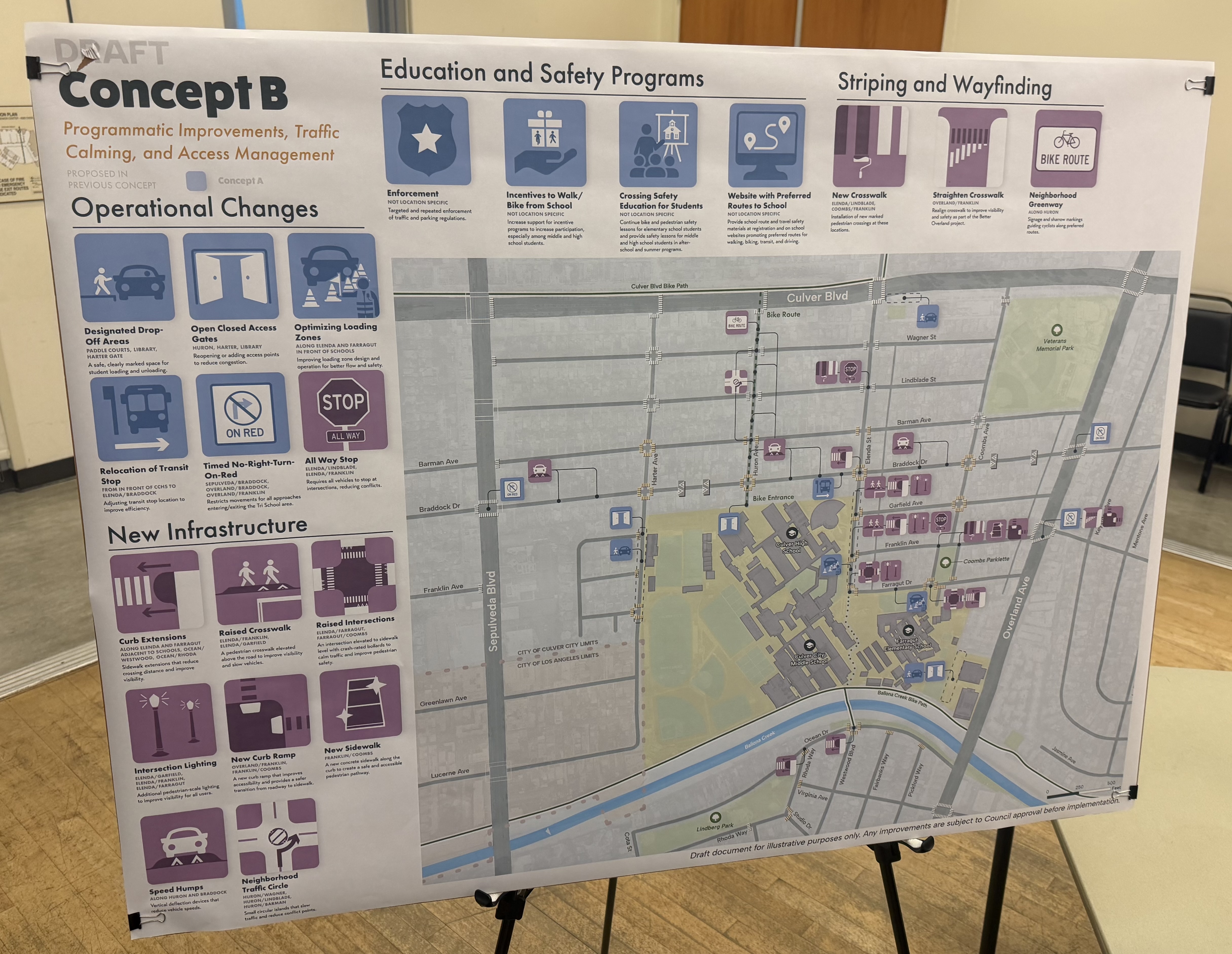
Residents attending the workshop were presented with multiple draft concepts, ranging from primarily operational improvements to more invasive traffic-calming and infrastructure changes. But buried within the workshop materials was a key finding that fundamentally changes the conversation.
The City Explicitly Rejected Protected Bike Lanes on Elenda
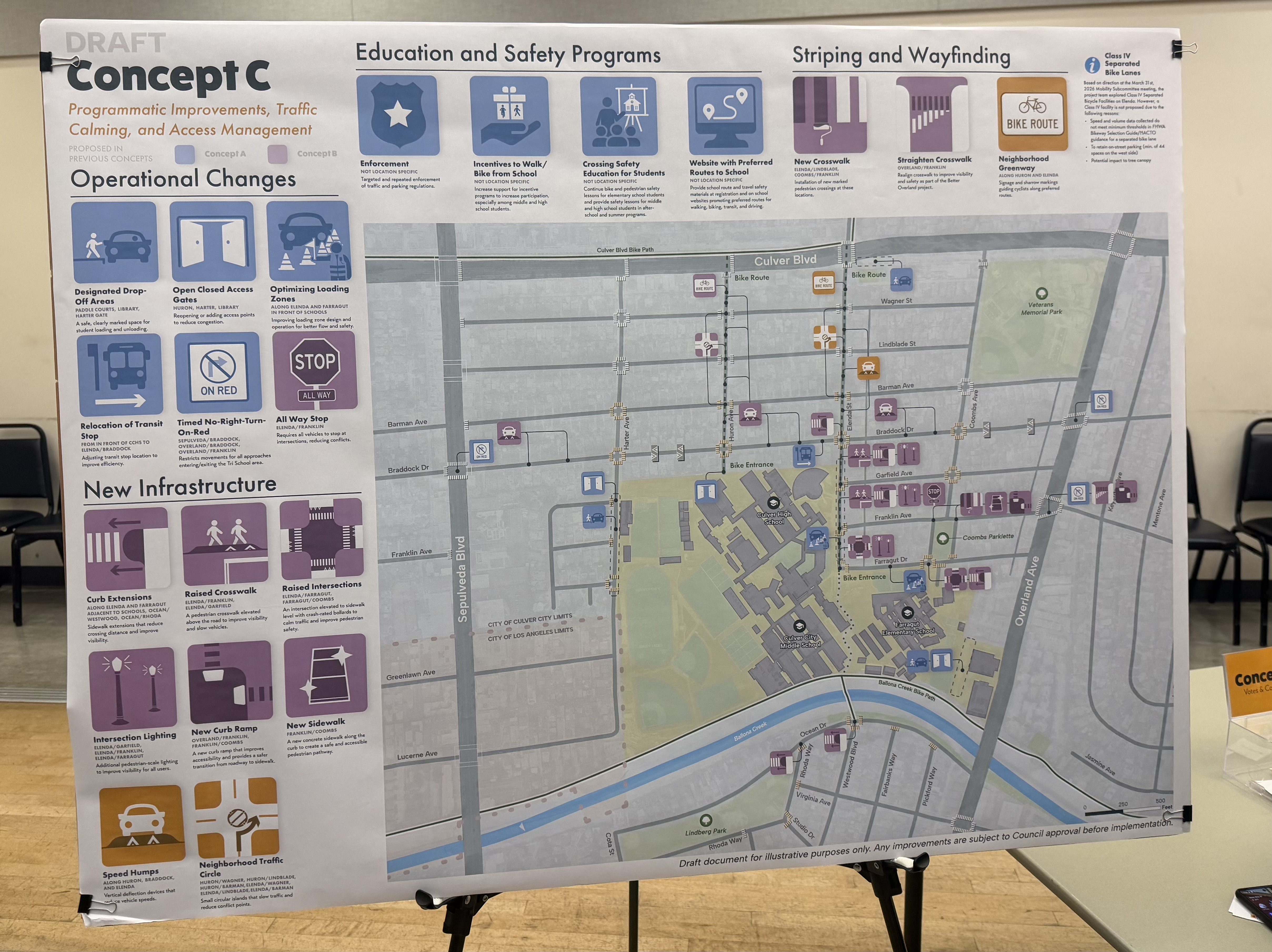
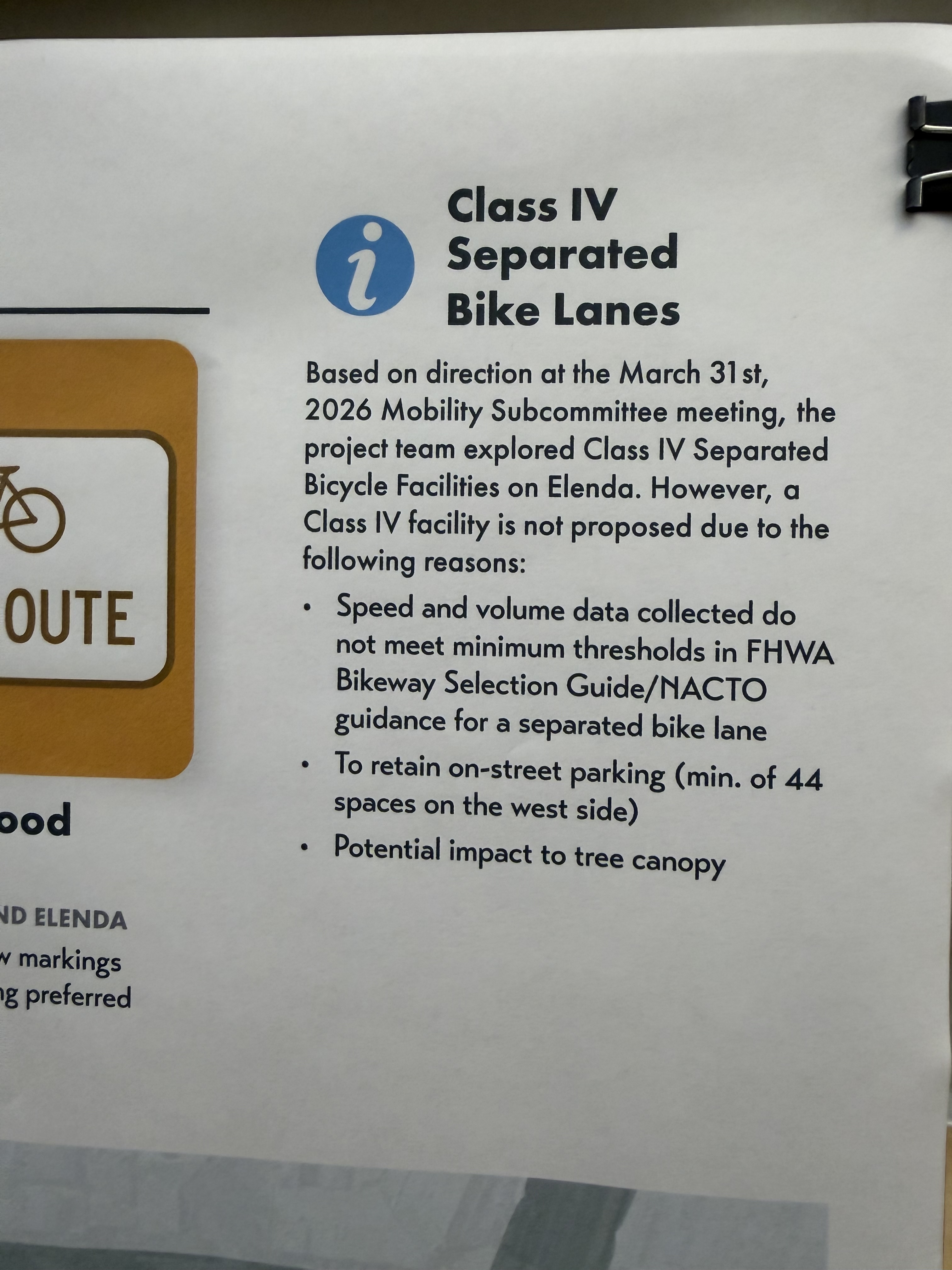
One workshop board directly addressed the possibility of installing “Class IV Separated Bike Lanes” on Elenda Street.
The project team ultimately concluded that separated bike lanes were not recommended for several reasons:
- Speed and traffic-volume data did not meet the minimum thresholds required under federal and national bikeway guidance
- Preserving on-street parking remained important
- Potential impacts to the mature tree canopy were significant
In other words, the City’s own study found that Elenda does not exhibit the traffic conditions typically used to justify aggressive separated bike-lane infrastructure.
That finding is significant because some activist organizations and political allies have continued pushing for more extreme redesign concepts despite the consultant analysis and collected data.
The Data Did Not Show Meaningful Dangerous Driving Patterns
The workshop also confirmed that the City conducted broader “big data” analysis focused on risky-driver behavior.
Again, the findings did not demonstrate meaningful dangerous-driving patterns in the historic Elenda neighborhood that would justify major corridor reconstruction.
This directly undermines claims that Elenda is experiencing the type of severe speeding or safety crisis often used to rationalize large-scale permanent redesigns.
Operational Improvements Emerged as the Most Practical Solutions
Ironically, many of the most sensible workshop proposals were not infrastructure-heavy at all.
The concepts repeatedly emphasized:
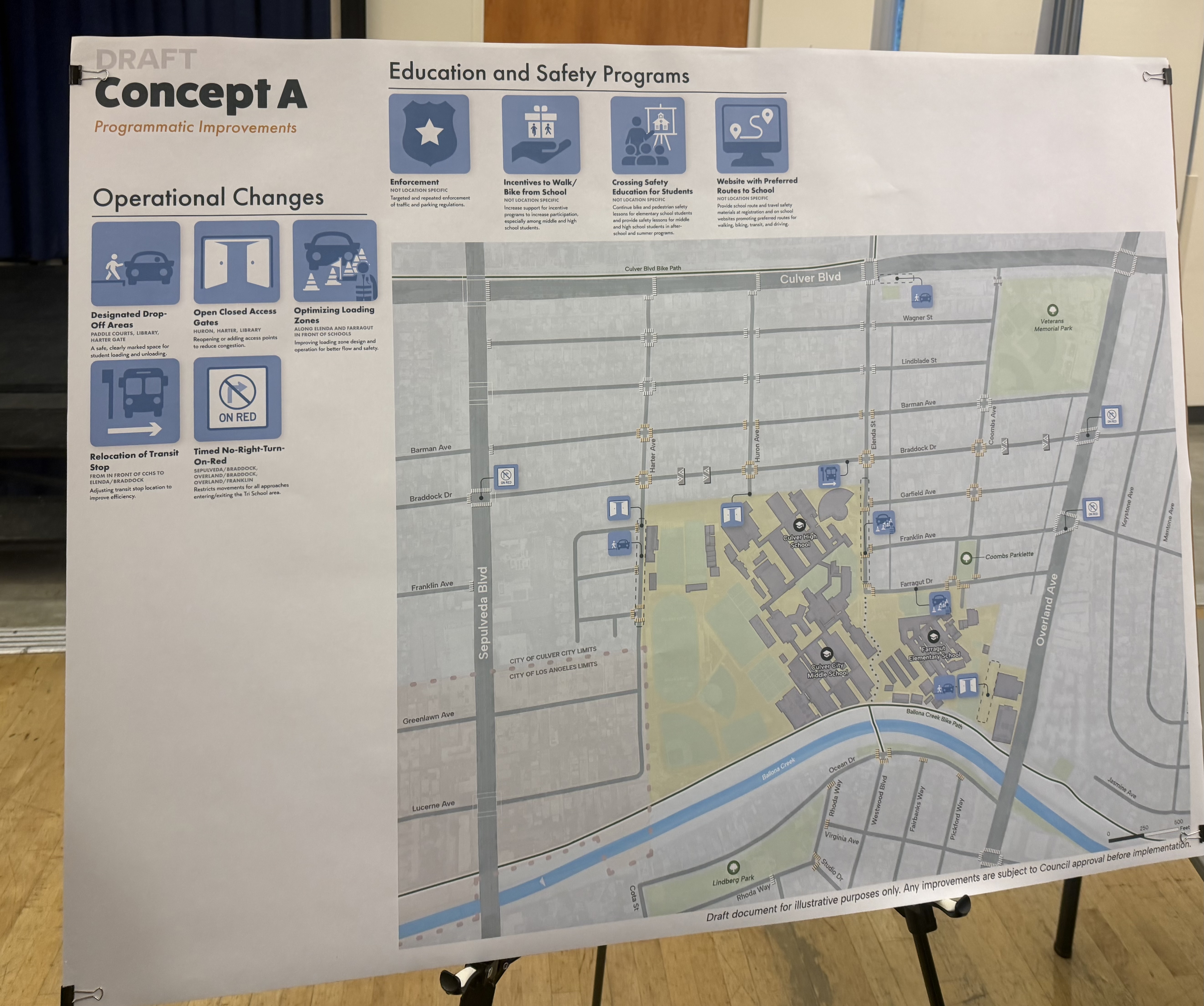
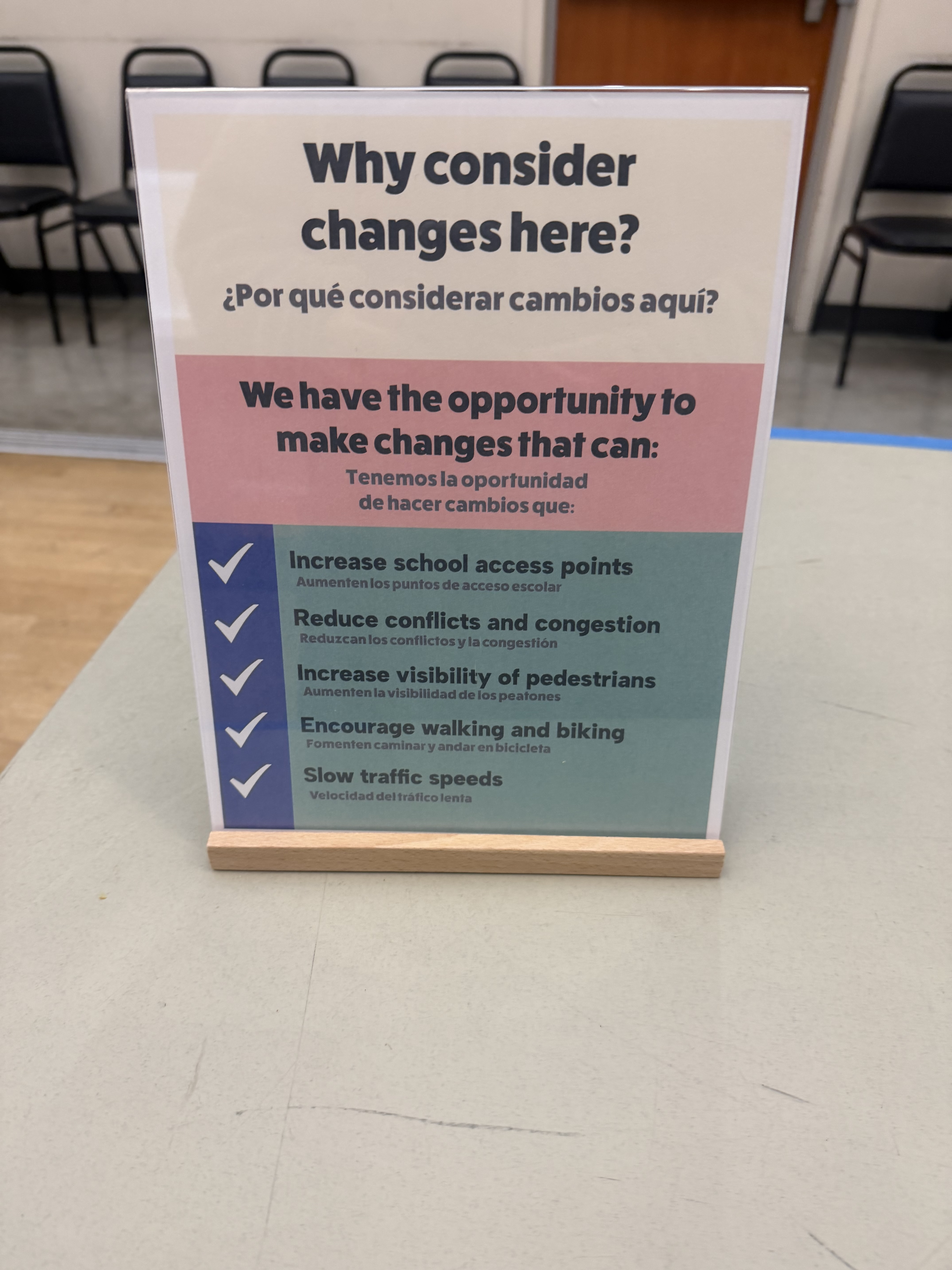
- Additional school access gates
- Improved loading and unloading operations
- Better circulation management
- Crossing education and visibility improvements
- Safer pedestrian routing
- Distributed drop-off areas
These are operational strategies aimed at addressing school pick-up and drop-off congestion without permanently altering the residential character of the neighborhood.
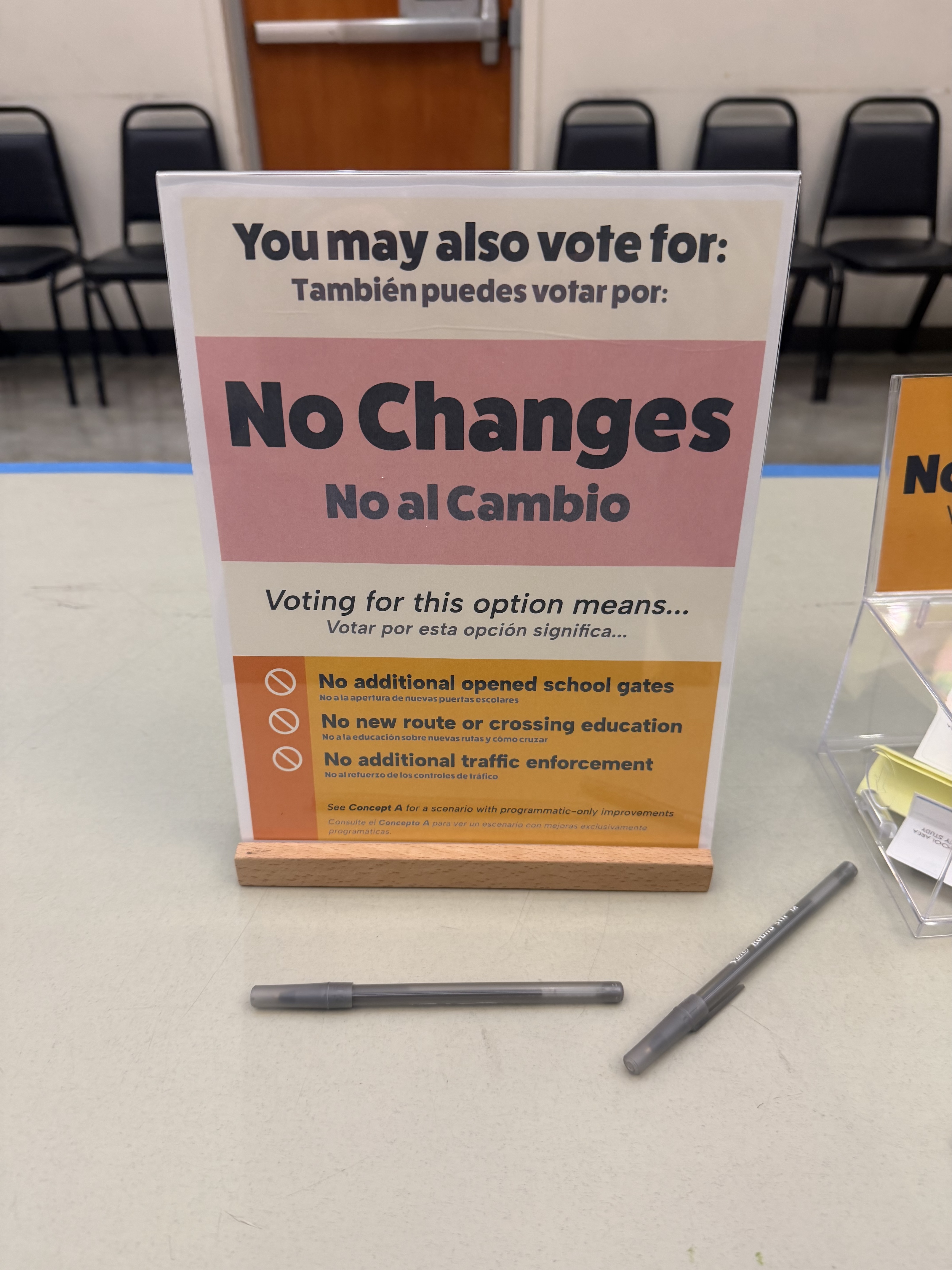
Concept A, in particular, focused primarily on operational improvements rather than physical reconstruction.
That aligns closely with what many residents have argued from the beginning:
improve school operations first before redesigning neighborhood streets.
Residents Continue to Prioritize Trees and Parking
Another major takeaway from the workshop was the continued importance residents place on preserving both the mature ficus canopy and residential curb parking.
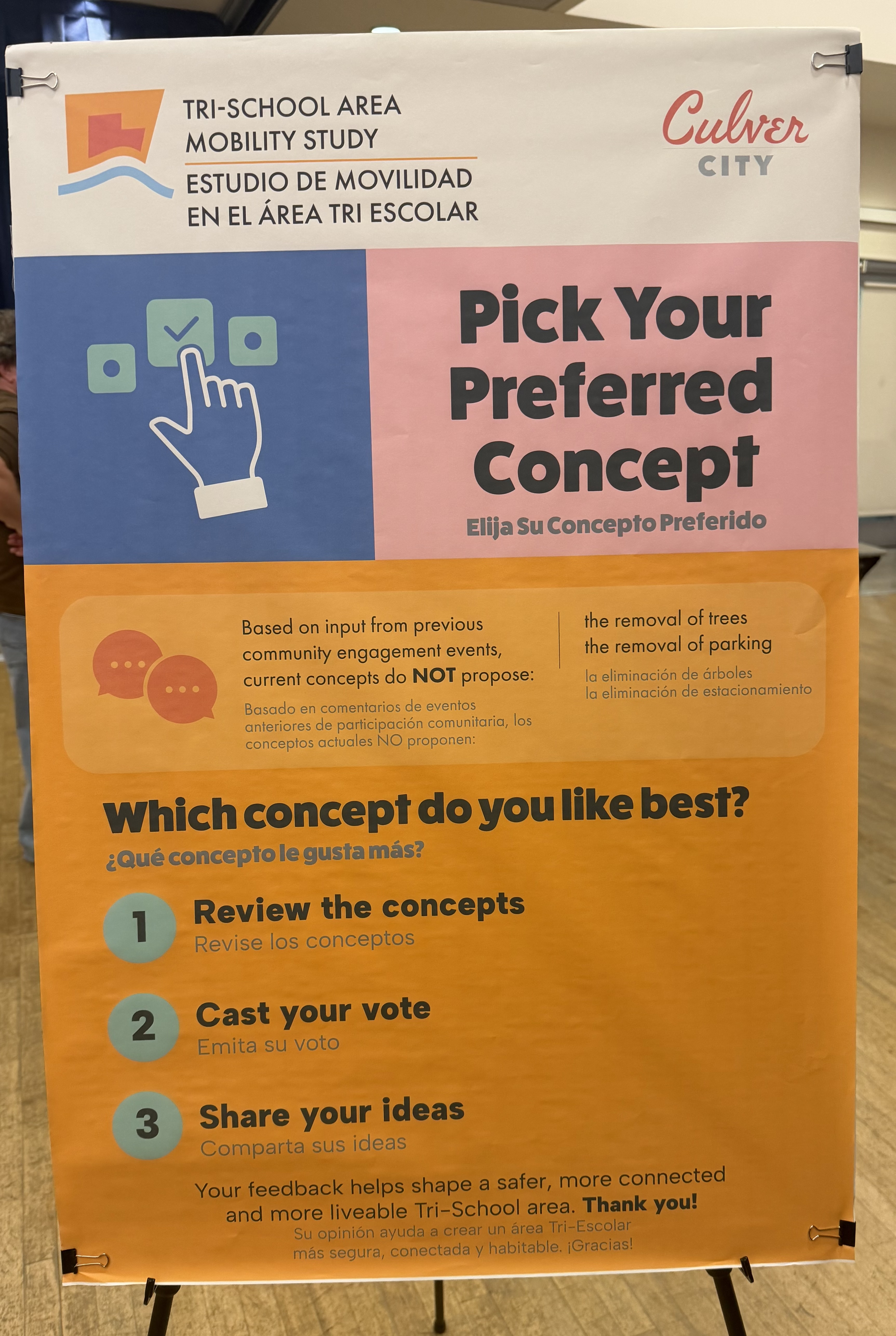
Workshop materials specifically acknowledged that current concepts do not propose:
- tree removal
- parking removal
That acknowledgment matters because residents have repeatedly raised concerns that more aggressive future concepts could eventually threaten both.
For the historic Elenda neighborhood, these are not abstract concerns.
The mature ficus canopy is one of the defining environmental and aesthetic features of the area. Likewise, many homes rely heavily on curb parking due to limited driveway access and constrained alley conditions.
A Growing Disconnect
The workshop ultimately highlighted a growing disconnect between:
- the consultant findings,
- the actual collected data,
- and the ideological goals of regional transportation advocacy groups.
The City’s own materials now show:
- low traffic volumes,
- relatively low speeds,
- limited risky-driver behavior,
- concern for parking retention,
- concern for tree preservation,
- and an emphasis on operational solutions.
That reality makes it increasingly difficult to justify extreme permanent redesigns for a quiet residential neighborhood.
As the process moves toward final recommendations, residents will likely continue asking a simple question:
If the City’s own data does not support aggressive reconstruction, why are some activists still pushing for it?